Listening In

Thursday, January 19, 2012

Winter lights


20th January 2012


Tuesday marked the 17th anniversary of the Great Hanshin-Awaji Earthquake, better known outside Japan as the Kobe earthquake.

But there's a permanent memorial in a park in the Kobe city centre. The names of the quake victims have been inscribed on little black plaques in an underground chamber. When I was there last December, someone had left offerings of flowers and paper cranes.


I was in Kobe for the annual Luminarie, a light festival held to remind people of the quake that devastated the city. This was the first installation.


Above the rose window-like centre, a half moon.


Then onto and under the shining arches.


There were food and souvenir stalls along the way. This little boy had a bowl of soup gyoza but when he saw his father get some noodles, he wanted them too.
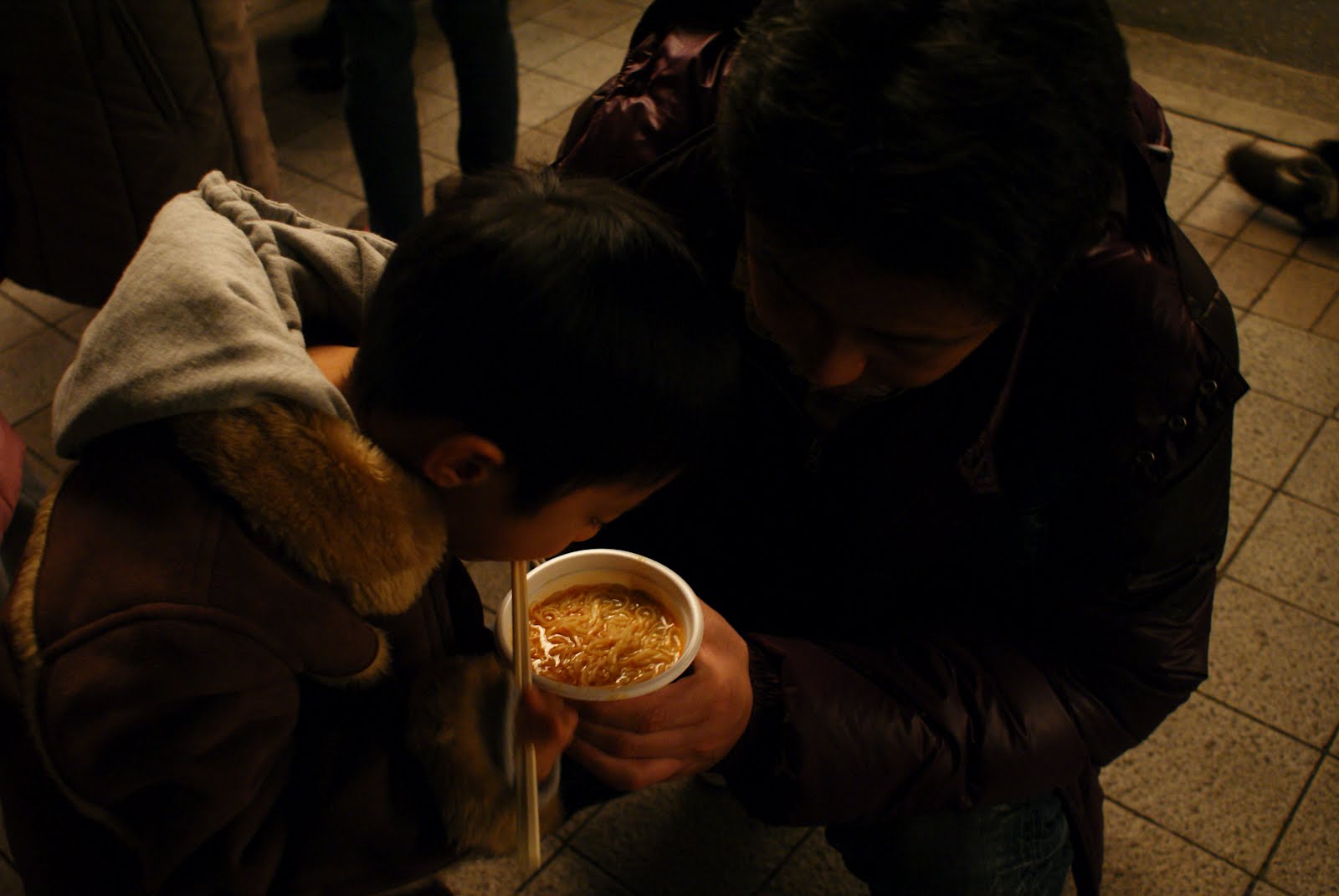


It's a wonder that the parents of young children get to eat at all but I have been told that you can do quite well hoovering up whatever the kid leaves behind.


The highlight of the event: an enclosure composed of giant light panels.


Photography frenzy. And if you wanted everyone in your party to be in the shot, a volunteer photographer was on hand to take the picture.


I found it hard to look away from the lights.


Designs by Italian studio Valerio Festi. The Luminarie is a European tradition dating back to the 16th century and is particularly associated with southern Italy.


More light architecture.


But this time, with a reflecting pool.


Nearby, the obligatory food stalls. This one sold crepes. You could order a crepe with a creme caramel pudding inside.

I'm not sure how I should respond to that.


Grilled tuna on a stick. I don't think you're allowed to order the head though.


Doner kebab world domination proceeding on schedule.


But the event is more than a festival of the flesh. This installation was titled Garden of the Spirits.


Reflection.

Thursday, January 05, 2012

Visiting relatives


6th January 2012


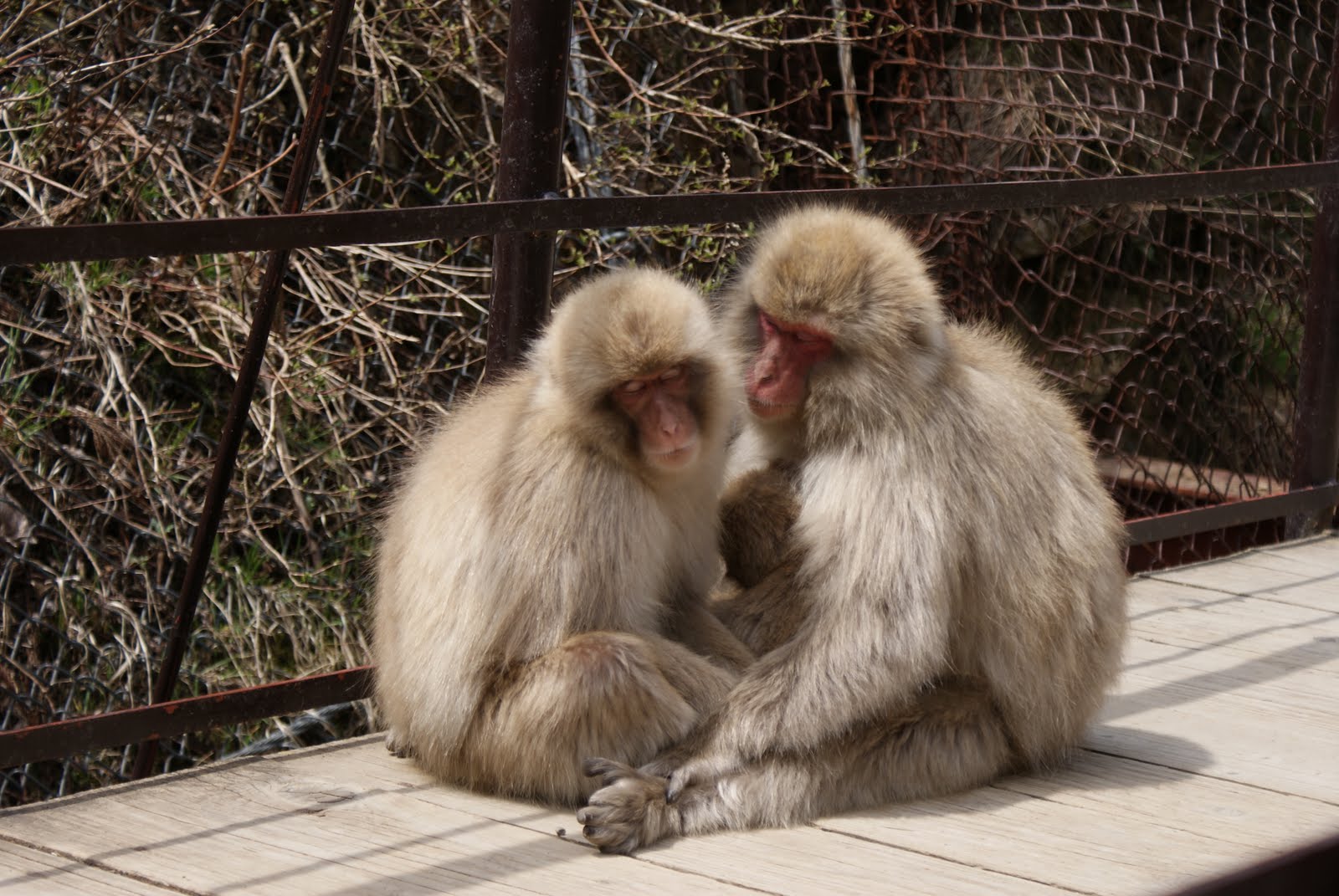
In winter, the monkeys of the Jigokudani Yaenkoen nature park get serious about bath time.


Images like this one from the park staff is what draws visitors from all over the world to this mountainous corner of Nagano prefecture.

But when I visited in May last year, there were some monkeys in the hot springs too. Just without the surrounding snow.


Japanese macaques are unusual because most primate species are found in the tropical or sub-tropical belts. For adapting to life so far north of the equator, the macaques have earned the nickname, snow monkeys.

But, as the park staff are keen to tell you, there's more to the macaques than their fondness for hot springs.


A monkey is groomed, whether it likes it or not.


A youngster playing on some ropes near the hot springs bath. I saw many people in the park with the same expression as the one that this visitor has.


There were so many monkeys wandering around that some were overlooked.


But how close really can you get to the macaques?


This close...


This close...


But not this close. The hand belongs to the chief of the park. Another official - I was there on a work trip - told me that the only human the monkeys will approach like this is the chief. 'It's like they know he's the boss,' he said. He sounded a bit envious.


And, unless you're another macaque in the herd, getting this close is probably a little out of line.

Still, the amount of access is remarkable. Especially since they seem happy to ignore you and get on with the business of grooming, bathing and foraging.

While the images of the macaques in the snow have made them famous, if you visit them in other seasons, you'll might see something like this.


Visitor Masako Ito took this shot of a baby monkey seeking shade under a bench.

I think my Kawaii-O-Meter just broke.

Saturday, December 10, 2011

Autum dark, autumn light


11th December 2011


When the crowds show up at Kodai-ji on autumn evenings, this is probably what they're hoping to see.


The queue can be long but there are things to see on the way to the temple's ticket office.


And the wait, I think, is worth it.


The water was so clear we got two autumn landscapes for the price of one.


Though this young gentleman was more interested in the lights than in what was being lit up.


I hope he saw the phoenix though.


And the gold on the hall where the temple's founder, Nene, is enshrined.


If you follow the arrows along the path, they will take you to a bamboo grove...


...then lead you back to the start for one last look.

Monday, November 28, 2011

Tamasaburo V


29th November 2011


More womanly than women themselves - that's how the men who play female roles in kabuki theatre are sometimes described.

But the onnagata - literally, female form - will say that they do not try to be women or even imitate them. They aim to be onnagata.

In 1629, the shogunate banned women from performing in public - ostensibly because of the audience brawling over actresses - so the female roles went first to boys and then to men.

Over the 360-odd years of kabuki history, men came up with an artificial image of women. These stage women walked a certain way, spoke a certain way, danced a certain way. The point was not to be true to real life; the point was to be true to kabuki.

Probably the most famous onnagata alive is Bando Tamasaburo V, known not only for his career in kabuki but also for crossing genres in collaborations with people like Yo-Yo Ma.

Earlier this month, Tamasaburo V was presented with the Kyoto Prize, a 50 million yen award given out each year by the Inamori Foundation, set up by the founder of manufacturing company Kyocera.

As part of a series of events held in conjunction with the award ceremony, Tamasaburo and the other two laureates - both scientists - held lectures, workshops and forums.

Most of the events took at the Kyoto International Conference Centre, where there was also a Tamasaburo photo exhibition. I took a lot of photos of people taking photos of photos.


In 2008, Tamasaburo appeared with China's Suzhou Kunqu Opera Company, playing the female lead (in photo of photo above) in The Peony Pavilion: a role that he said he spent three years preparing for.


A 2009 photo by Takashi Okamoto of Tamasaburo in Sagi Musume (Heron Maiden). The dancer plays both a tortured heron spirit and a girl in love.


Another notable role: the courtesan Akoya in Dannoura Kabuto Gunki. Photo by Takashi Okamoto.


Make-up is an important part of role creation in kabuki, with actors adding their own individual twists to the "face" of a character.


A few days after the prize presentation was a student forum.

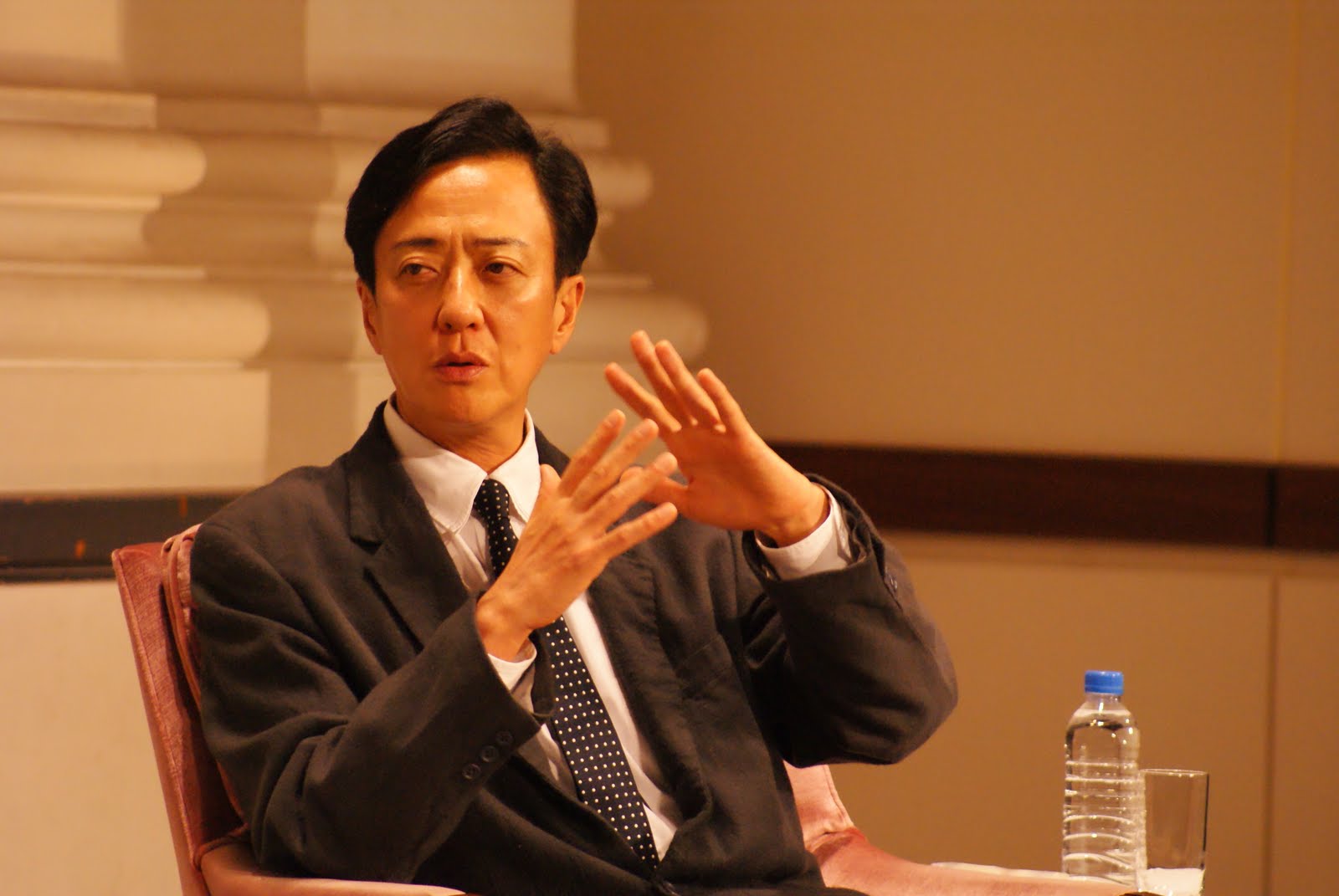
I still remember his hands. For a country where people prefer to use their hands to make things than to talk, Tamasaburo's hands carried on a dialogue all by themselves.


A lot of the photos looked like this: face clear and hands a blur because they wouldn't stop moving.

Here's one sequence:


Dancers are the people who move even when sitting still.