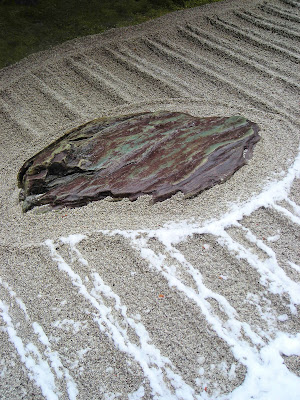
Listening In

Wednesday, October 29, 2008

What I found


29th October 2008


Went for a walk today, crossing two rivers to reach a street named for the temples that line it.


I found a perfect flower...


...perfectly imperfect stones...


...old wood against a new sky...


...and the place where the sun and moon are kept.

Saturday, October 18, 2008

Tadaima


15th October 2008


Ishibei-koji (石塀小路)

Monday, September 22, 2008

I take a photo of a vending machine (almost) every day. Sorry.


27th September 2008


Hear the sound of one hand restoring length to yet another column.

Hear - one hand - sound - restoring -

...

I TAKE a picture of a vending machine (almost) every day. Sorry.

Well, I don’t, to be honest. But a man living in the northern Japanese island of Hokkaido does.

Calling himself Motomachi Nijuuyon Ken, he puts the snapshots up at a website he’s named, ‘I take a picture of a vending machine (almost) every day. Sorry’ – a blog that does exactly what it says on the box.

But what would prompt a man to photograph the same vending machine – and not one that sells underwear either – nearly every day for three years and counting?

In the profile section of his blog, Motomachi-san says he has no interest in vending machines or canned drinks. Claiming to dislike ‘troublesome things’, he looked about for undemanding content and ‘ended up doing this’.

‘I get annoyed on days when there are changes,’ he adds, ‘Because it means work’.

His blog has attracted some interest from the media, which may be why he has left a notice saying that they are free to use the blog material but he does not wish to be contacted.

Respecting the wishes of this Greta Garbo of the vending machine world, I’ve confined myself to his work and a sort of meta-diary, a log of a log, has emerged. It seems appropriate for these post-modern times – and it’ll cost you less than a can of Coke.

Aug 5, 2005: First post of the blog. A picture of a drinks machine like the thousands scattered throughout Japan.

Aug 8, 2005: Second posting. Another photo of the machine with the words ‘No change’ over it. This will become the blog’s most common post title.

Sept 14, 2005: The first record of change – about a month after the launch of the blog. The drink displayed third from right in the centre row has been – wait for it – replaced! Motomachi-san commemorates the big moment with tidy blue arrows, red boxes and yellow labels.

Sept 19, 2005: A day of upheaval in Vending Machine Land. Products are added, others taken away, designs are changed… Even items that manage to stay on are moved about. ‘A change of this scale could well be called a revolution or a coup d’etat,’ says Motomachi-san. He calls this post ‘The Great Revolution’.

As if to recover from the excitement, there are no more changes until three months later, when canned cocoa is introduced to the line-up.

Feb 2, 2006: Motomachi-san notes that the display looked different on his way home, presumably from work. ‘Details will come tomorrow,’ he writes. ‘But it’s a bit sad that I’ve turned into someone who can tell the differences with just one glance.’

March 6, 2006: Seven items sold out. For the first time, Motomachi-san lists all the drinks in the machine, together with the can volume and availability. Also for the first time, he assigns a label to each product, depending on where it appears in the display. So the 300ml Fanta Grape, fifth from left in the bottom row, is C05. What we have here is a man getting organised about his hobby.

March 8, 2006: Sayonara cocoa, says the title of the post. The Europe Premier Cocoa introduced in December has been ejected by Royal Milk Tea. Truly, we live in a world of transience. And so, we bid farewell to cocoa as snow drifts across the vending machine.

March 17, 2006: With spring, life returns to the world – and heads for the vending machine. The phenomenon began four days ago, with three products selling out. The figure climbs steadily and, today, eight items are unavailable. ‘It’s the Sell-out Fest of Spring,’ declares Motomachi-san.

April 17, 2006: A notice from the blogger. ‘I will be away from the 18th to 19th so I will be taking a break from updates. Please make do with the vending machines in your neighbourhood.’

May 10, 2006: A revolution such as we have not seen in ages, trumpets the post title. To indicate the changes, Motomachi-san scrawls red arrows all over a photo of the revitalised line-up. It looks like someone’s turned the vending machine into a game of Snakes and Ladders.

May 12, 2006: ‘I leave it for two days and there’s another big change. It’s trying too hard,’ moans Motomachi-san. The Snakes and Ladders arrows now look like tunnels left by earthworms on a digging spree. Such is the scale of the revolution that two days later, he feels compelled to organise all the movements into a table.

Aug 1, 2006: Motomachi-san informs his readers that he won’t be updating the blog for a week because of work. ‘What do you think will have happened when I return?’

His post draws more than 60 comments. ‘The machine will be taller and look a little grown-up,’ says one person. ‘It’ll have a TV attached,’ says another. (No idle threat in technology-mad Japan.) A third has an even grander vision: ‘It’ll have declared independence and will no longer accept Japanese currency.’

Aug 6, 2006: Motomachi-san’s wife takes a picture of the vending machine and sends it to him. He puts it up at the blog with the title, ‘No change’, and adds: ‘It’s good to have a beautiful wife who takes photos well.’

He calls his wife okusama-chan: a term I struggle to translate. Chan is like a cutesy version of the -san honorific added to names but is used mainly for girls and women you’re very close to. It’s also applied to males too young or too good-natured to put up a fight.

A man may well use chan when referring to his spouse but he wouldn’t call her okusama: an extremely polite way of talking about someone else’s wife.

So the combined effect of okusama-chan is… Well, it’s as if he called her Lil’ Honourable Wife. Or Honourable Wife Babycakes. If anyone has a better translation, I’d love to hear it.

Oct 24, 2006: The first retrospective, about a year and two months after the blog was launched. A photo of the vending machine taken that day together with one showing what it looked like a year ago.

July 26, 2007: Is this the end? Motomachi-san posts this notice: ‘The vending machine featured in this blog is located in front of a yakiniku shop which, to the best of my knowledge, has not opened for business these past three years… But these few days, things have changed. This is just an impression but it looks like the shop will have to leave the building. So the vending machine may also go.’

March 20, 2008: Eight months later, the machine is still there. I think it may be safe to stop holding your breath now. Unable to update the blog because of a business trip, Motomachi-san makes a paper version of the machine instead. It’s about half the height of a propped-up mobile phone. It’s…cute. Even in a land of small, cute things, it’s a winner.

Aug 4, 2008: Three years after the first post, we finally learn the reason behind the photos. Motomachi-san writes: ‘The blog turned three today. On the first anniversary of my younger sister’s death, I thought about coming up with one of those silly, meaningless things that she loved and from the following day, Aug 5, 2005, began keeping these records. And that’s how this blog began.’

At first, he says, he planned to wrap things up after a year but now aims to keep going for five: ‘If you would, every now and then, come to take a look and say, “That idiot still hasn’t stopped!”, I would greatly appreciate it.’


The loss of a close connection prompted Motomachi-san to forge a new one but it wasn’t something you’d have expected. He picked an ordinary vending machine and devoted three years of attention to it.

In the process, he’s helped others connect with something so ingrained in the urban landscape that we look at it without seeing it.

With his blog, he’s made minute changes in a vending machine personal and opened up a whole new world of wonder. I wonder, for instance, who on earth would buy a drink called Hokkaido Milk and Vegetables.

And because of his photos, I’ve watched time pass in a new way: Snow encrusting the vending machine buttons gave way to summer glare which faded out in turn to yield to plastic maple leaves in autumn.

If you can see a world in a grain of sand and a heaven in a wild flower, imagine what you’d find in an entire vending machine.


http://jihan.sblo.jp/

Wednesday, July 30, 2008

Eels, escalators and a side-splitting story


30th July 2008


If you've visited this blog before, you'll know that what follows is longer than the published version.

How much longer?

About 100 per cent. I was under the influence of eel.

...

Some people say that we live in but one universe among many and that parallel worlds hold other versions of ourselves.

These theories may be more than science fiction because, every now and again, something rumples the fabric of space and time – and I get e-mail meant for an alternative me, in particular, the one doing a column called Letter from Tokyo.

I answer the messages anyway, and hope that the other me responds to readers who write in about the Letter from Kyoto column.

But I’ve been thinking lately that there can’t be that many fluctuations in the space-time continuum and perhaps people just confuse Kyoto with Tokyo?

I’ve resisted this explanation because though the names sound similar and the two cities are separated by only about two and a half hours by bullet train, they’re worlds apart.

Even without going into the centuries of rivalry, it takes just one visit to start seeing the differences.

In Tokyo, I get lost in train stations like underground cities and among reefs of steel and glass skyscrapers.

In Kyoto, buildings in the city centre are capped at 31m – about 10 storeys – and the sky can breathe out without fear of being poked and pinched.

But I still get lost. Though if I’m lucky, it happens in streets of picturesque wooden townhouses.

If you were to take a bird’s eye view – assuming you can find an urban-minded bird – more differences appear.

Tokyo sprawls over a plain by the sea, crowding neighbouring prefectures, while Kyoto city sits with its feet together in an armchair of mountains – and doesn’t look like it’s going to move from its inland spot any time soon.

As a result, Tokyo was in a good position to become sushi capital of the world unlike landlocked Kyoto, where not much is said about the fish. But what it lacks in raw tuna, it makes up with tofu. And its vegetables, whether pickled or fresh, can turn the most unrepentant meat-eater into a convert.

But cities are fed by more than food. In Tokyo, government, finance and commerce sustain its population of 12.8 million as they race from one trend to the next in a relentless pursuit of the new. Kyoto, on the other hand, draws strength from the past; some of its shops are run by families who have been in the trade for over 20 generations.

I’m generalising, of course. Tokyo has plenty of history – Sensoji, its oldest temple, dates back to the seventh century – and Kyoto, for all its tradition, is also the headquarters of Nintendo, which began there in 1889 as a company that produced handmade playing cards.

Still, don’t throw away the stereotypes yet; they may come in handy as we flip through the pages into the past, all the way back to 794, when Emperor Kanmu established his base in the river basin that came to be known as Kyoto, the Capital City.

Centuries of power struggles followed but in 1600, warlord Tokugawa Ieyasu fought his way to the top, eventually ruling a unified Japan as shogun from his castle in Edo (now Tokyo). Kyoto ended up politically sidelined, like the emperor and his court, but this freed its citizens, from the nobility down to merchants and craftsmen, to devote themselves to culture.

Specialising in disciplines such as poetry, incense and the tea ceremony, Kyoto's people built on their reputation for refinement, creating luxury goods for the rest of the country. That reputation has lasted and the city is still a shrine to traditional arts and crafts. So if you find yourself there during Kyoto's notoriously sticky summers, fan yourself with one of their delicate, handmade sensu - and melt in style.

If Kyoto was the city of culture then Edo was the city of samurai, the linchpin of the military government that remained until 1868. It was a man's town, with about 70 per cent of its land given over to the samurai, who swaggered about with two swords stuck through their waist sashes.

In contrast, Kyoto didn't even have a residential area for samurai and neither did nearby Osaka, the port city that became the centre of the Japanese economy in the first century of Tokugawa rule.

Discussions of the Kyoto-Tokyo divide tend to spread out into a wider regional debate that sweeps up even foreigners in Japan. Over in the eastern corner is the Kanto area, commonly equated with Tokyo because it takes up such a Godzilla-sized place in the popular mind that the prefectures of Kanagawa, Saitama, Gunma, Tochigi, Ibaraki and Chiba get overlooked.

To the west is the Kansai region, probably known best for rambunctious Osaka, but also buoyed up by the idiosyncracies of Kyoto, Nara, Wakayama, Hyogo, Mie and Shiga.

The rules of the debate are simple: Familiarise yourself with the stereotypes and then…pick a side!

The very names ‘Kanto’ and ‘Kansai’ are about sides. Kan means barrier – in this case, an old checkpoint in Hakone – so Kansai refers to the land west (sai) of the barrier and Kanto, the region east (to) of it.

This division is found in everything from dialects to eels to escalators.

A Tokyo friend who met her future husband when they shared the same office in the capital said there were times when she just couldn’t understand him. This had nothing to do with the usual man-woman communication breakdown. Born in Nara, he would lapse at times into the Kansai dialect, which veers away from standard Japanese in intonation, inflections and even in vocabulary.

But the rift goes beyond how people talk to what they actually say. According to the stereotype, Kanto residents are cool, reserved and more interested in sophistication than Kansai folk: a straight-shooting, entrepreneurial lot who would rather play for laughs.

This perception has a great deal to do with the association of Kansai with Osaka, which has a history as a city of merchants – and comedians.

Manzai duos from the city became famous across the country when they took their routines to television but the ordinary Osakan is also seen as someone with an Inner Comic just waiting to be unleashed.

Here’s something to try if you visit the city: Hold your fingers like a gun and pretend to fire it at a passer-by, preferably with a cry of ‘bakkyun!’ If the passer-by is a native of Osaka, chances are, he’ll fall about and do his best to act like he’s been shot.

Having cut their teeth on comedy programmes, Osakans are primed to join in gags even if they’re by complete strangers.

Chizu-san, a friend who explained the phenomenon from a native’s point of view, said: ‘I think none of us can stop ourselves from pretending to be shot if we were “bakkyuned”.’

But Osaka is also known as a city of people who would bankrupt themselves for food. (In Kyoto, it’s kimono. As for Tokyo, er, I don’t know. Black suits and shoes, maybe?)

And food is another area where Kansai and Kanto have agreed to disagree. They split over the soup for noodles (darker in the east) and complain that instant noodles taste funny on the other side of the country. If the debate goes on, someone may raise a stink about the smelly fermented soya beans called natto – a lot of Kansai people won’t touch the stuff though Kanto swears by it.

Even the ways eels are sliced depends on region. In Tokyo, they’re split in the back because cutting across the front reminded the samurai there of seppuku – ritual suicide that began with slashing the abdomen.

But in Osaka, with samurai making up less than 1 per cent of the population then, this was hardly a problem. If anything, to the merchants of the city, opening up the gut symbolised hiding nothing from customers.

The we-merchant-you-samurai difference is also whipped out to explain why people in Kanto stand on the left on escalators, leaving a path clear for people to charge up and down, while Osakans line up on the right side.

Standing on the left, it is said, lets samurai draw their swords freely but merchants will keep to the other side to protect their belongings in their right hands.

It’s a great theory though it starts to unravel when you consider the number of years separating the ban on carrying swords and the introduction of escalators.

The more convincing explanation is that when the World Exposition was held in Osaka in 1970, a railway line there made announcements asking passengers to keep on the right to accommodate the numbers of foreign visitors.

But what all this really means is that by travelling a little, you get to take a ride on the other side – and taste different flavours in soup, speech and spirit.

When I asked a Japanese businessman about this, he said: ‘I’ve been to 56 countries but still think Japan is unique because, even though it’s not a big country, the regions have their own identities – perhaps because there are so many mountains separating them.’

For this reason, I get the feeling that I’m not just doing a Letter from Tokyo column in an alternative reality. I think I’m scattered through the worlds of the multiverse, filing stories from all corners of Japan – and enjoying the view from whichever side of the escalator I’m on.

Monday, July 21, 2008

Silk and straw


21st July 2008


Whenever the reading lists for Japanese studies are pulled out, Ruth Benedict's The Chrysanthemum And The Sword is almost certain to be featured.

Though criticisms have been levelled at the anthropologist's most famous work, it's still worth studying, if only for the impact it has had.

But equally worth reading is Dr Junichi Saga's Memories Of Silk And Straw. Even when passed through the filters of interviews and translation, it lets you hear the voices of ordinary Japanese in a way that Benedict's book doesn't.

Unlike her work, it's short on theory. It just presents a fading generation as best as it can - and lets you make your own mind and your own theories up.

So I'll just tell you a bit more about the book and leave you to decide for yourself if it's something you want to look into.

...


‘My mother once told me that I only just avoided being killed the day I was born.’

Thus begins one of the life stories in Memories Of Silk And Straw, a book of reminiscences collected by Japanese doctor Junichi Saga.

Based in Tsuchiura, a small town about an hour by train from Tokyo, he would end his day by putting a tape recorder in his medical bag and going to interview the elderly.

He spoke to hundreds of them, piecing together what life there was like before World War II.

Many of them talked about the widespread poverty that made it common for people to go about barefoot and hungry – and to kill newborns they couldn’t feed.

But in the case of Mrs Fumi Suzuki, whose mother told her that the start of her life was nearly the end of it, it was her looks that were her undoing. Apparently, she was so ugly that her parents and grandparents decided that she wouldn’t be able to find a husband and so asked the midwife to get rid of her.

The woman wrapped the baby tightly, covered her face and left her to suffocate.

But after a while, the mother noticed the bundle of rags moving and when they unwrapped it, found the newborn still alive.

They decided that it would be bad luck to try to kill her again so they let her live. She went on to get married at 20 and survived into her 80s to tell Dr Saga her tale.

Her story, together with 60 others, was published in 1981.

Dr Saga then pushed for an English translation because ‘the stories revealed something about modern Japan very little understood by the rest of the world, and perhaps not even by the Japanese themselves. Namely, that the Japan which now prides itself on being an advanced, high-technology nation had, until only recently, a very different type of society; and that indeed it was this very society, backward though it may have been, which created the basis for what Japan has become today’.

He saw in Tsuchiura the kind of small town found all over the country and in its elderly, a generation who had experienced centuries worth of change compressed like an accordion into about 50 years.

Part of that change was the abolition of feudalism in the second half of the nineteenth century. But even after the laws dictating class differences vanished, a ghost of them lingered in people’s minds.

Mrs Mineko Toyama, born in 1903, remembered walking as a child with her grandmother one day when they met a woman who used to work for her family as a maid.

She ‘looked slightly shocked for a moment, then fell quickly to her knees and bowed with her forehead touching the ground’. Even though her old employer had been the wife of the local magistrate, ‘no passer-by, whether he’d known who my grandmother was or not, would have been particularly surprised at this spectacle’.

Though you’re not likely to see people kneeling like that in the streets of modern Japan, the reflexive ordering of the world into hierarchies remains.

In the same way, the work ethic of the present can be traced back to a world where people began the day not with the cock’s crow but before it.

Tofu makers were some of the earliest to rise: They were up before 2am to grind soya beans, squeeze milk from them and when it had set, went from door to door to sell it.

Children had to work too and those who living on farms would till the rice fields from half past four in the morning. One man who did this said: ‘By the time the six o’clock siren sounded I would hardly be able to move another step; but it was still a while before I got my breakfast so I’d just do my best to carry on’.

His stoicism might have been remarkable but it was by no means unique. Even childbirth hardly interrupted work.

Mrs Tai Terakada, born in 1899, recalled how her mother went into the mountains one day to chop wood and returned with something wrapped in her apron.

Thinking that it was fruit, she asked: ‘Have you got something nice for me?’

Her mother laughed and said: ‘Yes, I’ve brought you back a little baby sister.’

Alone in the mountains, her mother had given birth to the child, cut its umbilical cord with her knife then carried it home. But she didn’t want to leave the pile of branches she’d cut so she lugged that back too.

When recording this story, Dr Saga does not say what he, as a medical man, thought of this and the women who had to deliver their own babies because the midwife couldn’t reach them in time.

In his introduction to the book though, he dwells on the hardship of that period. But, he adds, ‘amid all the poverty and unhappiness of those days, there also existed a strange kind of serenity which today seems to have been lost’.

If you also feel that serenity is missing, try spending some time with Dr Saga’s people. Get into a boat with lake fishermen who can tell you what mood the sky is in by reading the clouds and listening to a faraway sea. Or else join hands with the neighbourhood children and walk around town, inviting people to a birthday party.

It may be dark when you leave the party for home but if it’s a summer evening, fireflies will fill the air like sparks blown from a fire.

From behind you comes the sound of bare feet slapping on the path – you turn to see a rickshaw, its lanterns swinging from side to side.

It may scare the frogs into silence but they’ll start up again once the rickshaw goes and besides, the moon, less easily startled, will wait over the distant mountains until you find your way home.

Friday, June 13, 2008

In the pink of health


13th June 2008


And here's another column because I, er, just wanted to post pictures of this year's sakura.


...


The pink mist is still swirling in my brain.

Once a year, a peculiar malaise grips the whole of Japan and the symptoms are most easily observed from March to May, with the cases peaking in April.

The malaise is called sakura fever and I have been identified as a carrier since last year.

The virus lies dormant for most of the year but when March melts winter from the air, the symptoms begin to flare up.

Sufferers find themselves checking television and Internet reports repeatedly for predictions of when the cherry blossom will bloom and once it does, track its progress with bloodhound focus from the south to the tip of Hokkaido in the north.

It is not an obsession; it is an epidemic.

Here are a few of the classic symptoms: Laying blue tarpaulin sheets under cherry trees, plonking friends, family or colleagues on them and buying up box-loads of yakisoba, sakura mochi and hanami dango.

The fried noodles and rice cakes and balls all translate into an insane infusion of calories, as do the fountains of beer, which is not drunk so much as soaked up.

But because so many people are infected with sakura fever, competition for a spot under the trees can be stiff. So some resort to arriving early, staking out a space with the blue plastic – and parking one member of their party on top of it.

This lot usually falls to the youngest and most junior person. Not because the young and the junior are the easiest to bully but because their youth means that they have the highest resistance to prolonged exposure to the source of infection.

While there is no known cure for the sakura fever virus, folk remedies involving alcohol abound.

But anecdotal evidence shows that alcohol has little effect against the virus. If anything, it accelerates the uninhibited singing, outrageous chat-up lines and other forms of behaviour unthinkable under normal circumstances.

Even uninfected passers-by are not safe from the excesses at the nightly parties as the constant explosion of camera flashes have been known to cause temporary loss of vision.

Be advised that the over-use of cameras and other photographic devices is a common sign of sakura fever. If travelling to areas where the virus is endemic, take precautions. Take sunglasses.

So virulent is the fever that no insurance plan in the world will cover it.

Yet though the virus has been active in Japan since at least the eighth century, surprisingly little has been written about how the disease is transmitted.

However, the word for the parties under the trees may offer a clue: hanami. Literally ‘flower-see’ or ‘flower-view’, it suggests that infection is spread through the eyes.

It is certainly true that most people seeing a cherry tree in full bloom will show the same signs of slackened jaw and glazed eyes almost immediately.

If not physically restrained, they will move towards the tree and stay under it for as long as they can. Similar behaviour has been observed in moths in the presence of a flame.

Furthermore, it has been hypothesised that the virus impels sufferers to move to the closest cherry tree as if, through renewed exposure to the cause of infection, it can stop the body from developing an immune response.

Work on creating a vaccine for the virus shows little signs of progress to date. This is mainly because researchers, when attempting to take samples, usually end up abandoning their work to go in search of beer and blue tarpaulin.

However, some argue that the source of sakura fever is not a virus but a bacterium – and a beneficial one at that.

Just as humans function better with the right bacteria in their digestive tract, those with sakura in their system show higher levels of sociability as anyone invited on the spot to a stranger’s hanami party will attest.

It has been said that the ability of blooming sakura trees to reduce inhibition explains why they are valued as safety valves, especially in societies which normally set a premium on self-control.

But perhaps the greatest contribution of sakura is not to the group but to the individual.

Almost everyone exposed to cherry blossoms reports an enhanced sense of well-being. They describe what epidemiologists would call joy if it were not such an unscientific term. And easy to spell.

It does not seem to matter whether the sakura in question is white or pink enough to suggest flamingos overdosing on food colouring.

It does not matter whether the flowers are gathered in tight bunches or trail along spindly branches that stir like a woman’s hair in the wind.

All it takes is one glance at a cherry tree in flower for delight to rush in and billow up into joy.

And that is why if I ever suspect that I am in danger of developing an immunity to sakura, I will sit under a thousand cherry trees, a blue sheet beneath me, until the roots have entwined themselves in my bones and the blooms dissolved in my blood beyond all possibility of a cure.


Tuesday, May 20, 2008

What can I say?


20th May 2008


There's a little place near my apartment that I think of as My Local Diner.

Never mind that the word 'diner' seems all wrong when the menu is in Japanese and almost everything on the menu is soaked to the bones in dashi stock.

It's the place with the cheapest noodles and rice bowls in the area - and most of it actually tastes good. They seem to have won some kind of award but they've stashed the gold plaque high up on an ageing heater so it won't distract you from the food.

I started going there soon after moving in and, in time, the people there - Grandpa, Grandma and their middle-aged son - got used to my strange Japanese and occasional inability to read the menu.

I drop by on average twice a week though when I was careening through a mad busy period, I ate there almost every day. There's enough range for that if you don't mind dashi flavouring almost everything except the curry dishes. And you wouldn't think it given the hole-in-the-wall decor but the tea tastes great.

And last Thursday, I went there again. I can't remember what I ordered but at some point, I noticed that I had been served a cup of green tea while every other customer had a glass of ice water.

I wondered why - and then I remembered. Last summer, when Grandma had shuffled to my table with a glass of water, I asked for tea instead because ice can do terrible things to your insides even in the heat.

Months later, almost a year later, she still remembered.

I've encountered great kindness from a great many people in my one and a half years in Japan but there was something about that cup of tea put wordlessly in front of me that reached inside to the place where I keep gratitude and sorting through the thank-yous, found all of them wanting.

Wednesday, April 30, 2008

Bunnies do their bit


30th April 2008


In a few days' time, it'll be Children's Day (Kodomo no Hi) in Japan.
But the national holiday, which falls on May 5, is known more commonly as Boys' Day.

(Girls' Day is celebrated on March 3. Around about that time, supermarkets explode with pink sweets in pink wrapping.)

As Boys' Day approaches, poles with large carp kites tethered to them start sprouting everywhere. When the wind blows, the carp lift and beat against the air just as if it were water.

The carp kites - or wind socks - can go up to a few metres in length but the ones I found today outside a shop in the geisha district of Pontocho were a lot smaller.

As small as this, in fact.


Thursday, April 10, 2008

Bull's-eye(ish)


10th April 2008


I've held off writing about the year I've spent studying kyudo, or traditional Japanese archery, because I haven't had the time to do a proper post about it, whatever a proper post means.

But I hit the bull's-eye today.

Well, not quite. It was a little to the right of dead centre but standing at the other end of the shooting range, it looked like I'd shot straight into the heart of the target.

Kawaguchi-sensei, the most senior of my three teachers, was there too.

'I feel like I should take a picture,' I said.

'Did you bring a camera?'

'Well - I have my phone.'

She was smiling. 'Do you want to take a photo?'

I thought about it. 'Erm, yeah.'

One of the other students was waiting by the targets to retrieve the arrows and she called out to him. 'Leave the arrow in the No.4 mato! She wants to take a picture of it!'

And off I went. Kawaguchi-sensei sent Sakai-san, another student, after me so I could pose with the target but all I really wanted was a photo of the arrow.

Staring at it now, I still can't quite believe it.

You wouldn't believe it either, if you'd been sending arrows too high, too low, too wide, too high and wide and, in the most embarrassing instance, into the ground about a metre before the target.

I'll probably never touch the centre again. But I'll remember the magic thhuddd of the arrow driving into the target - and the even more magical disbelief that followed.

Is it too late to buy a lottery ticket today?


Tuesday, January 29, 2008

The right to remain silent


29th January 2008


We hear a great deal about freedom of speech but what about freedom of silence?

Ironically, from the nation that talks the most about talking comes a push for the right to say nothing at all.

It comes in the form of an American magazine article called “Caring for your introvert” by The Atlantic correspondent Jonathan Rauch. Written in 2003, it continues to draw more hits than any other piece on the magazine’s website.

As an introvert, he says, he belongs to one of ‘the most misunderstood and aggrieved groups in America, possibly the world’.

Being introverted does not necessarily mean being shy; it just means that people tire you out.

While extroverts need company like the Energizer Bunny needs batteries, introverts recharge by spending time alone.

To introverts, other people are like sunlight: good in short stretches but prolonged exposure leaves you burned.

Still, Rauch makes it clear that introverts don’t harbour a grudge against the rest of the human race: ‘We love people… We just can’t socialize with them all the time. We want to hold their hand or hug them or just sit quietly and read a book with them.’

What introverts don’t want to do is go to cocktail parties and make small talk.

But the world is filled with people who do – and they set the standard for what is considered normal and desirable behaviour.

Some introverts learn to keep up a stream of conversation however much it tires them but those who can’t or won’t tend to get labelled as shy, aloof or arrogant.

Rauch notes that female introverts have a harder time of it because people don’t usually think of women when you say ‘strong, silent type’.

But whatever their gender, introverts are almost always outnumbered in politics, a field where what you say appears less important than how you say it – and how often.

Japanese Prime Minister Yasuo Fukuda seems to be one of the few who have risen to the top.

I don’t have conclusive proof that he’s an introvert but I have my suspicions because whenever people try to describe him, the same words keep cropping up: undemonstrative, self-effacing, steady, grey.

According to an article in The Times last September, when a supporter encouraged him to ‘express his personality’, he said: ‘I have no personality.’

Of course he does. It’s just the kind of personality that’s at the other end of the spectrum from former boss Junichiro Koizumi’s.

Though I think anyone, not just an introvert, would have trouble competing with somebody who has a habit of breaking into Elvis impersonations.

But, writes Rauch, ‘If we introverts ran the world, it would no doubt be a calmer, saner, more peaceful sort of place’.

I don’t know if this is true. But I do know that in a world run by introverts, no meeting would last over an hour because they don’t think by talking; they think by thinking.

And I know this because I’m an introvert too.

Don’t get me wrong – I enjoy conversations. In fact, I see them as one of the best ways to have fun with another person without taking your clothes off.

But I can’t have them all the time. In fact, I don’t have them a lot of the time, which prompted one friend to say: ‘You’re so quiet I sometimes forget you’re there.’

Ouch. Still, this could be useful if I ever decide to become a ninja. Or wallpaper.

By now, you should be able to work out on which side of the conversation gap you belong.

And if you’re an introvert, what can you do?

First, understand what you are – and look after what you are.

If you need time away from the maddening crowd, take it. Fighting this is like resenting your need for sleep.

Rauch also recommends helping extroverts to get comfortable with their opposites.

It can be hard to relax when silences keep breaking up a conversation. But not if you understand that ‘if someone is being quiet it doesn’t mean they’re having a bad time; it doesn’t mean they’re depressed; it doesn’t mean they’re lonely or need psychiatric help or medication’.

If you’re an extrovert, be confident that the introvert next to you is enjoying your company.

If he isn’t, don’t worry about it. It’s not like he’s going to tell you.

So, yes – I think it’s time to raise some awareness. Start by sending this post to 25 people within the next three days. Failure to do so will mean being trapped in 75 parties where people won’t stop talking at you.

But whether or not extroverts take any of this on board, introverts should be prepared to meet them halfway because we are, let’s face it, not the easiest lot in the world to live with.

Having once had to keep a dinner conversation going around someone who sat silent with his eyes down for hours, I can understand why extroverts get frustrated with us.

There are more ways to fit yourself into a conversation than by talking; you can do it by showing that you’re listening.

Just looking interested can take you as far as a well-placed witticism because who doesn’t like a bit of attention?

And if you’re not interested, well, that’s what the door is for.

But why should introverts have to go to such lengths, you may ask. Especially when extroverts don’t seem to bother?

Let me be clear about this: You don’t have to do anything, except maybe breathe. But what you do or don’t do will always have consequences.

The trick is to read far ahead enough to see those consequences, decide if you like them – and then act.

Come to think about it, you don’t even have to breathe if you don’t mind losing your vital signs.

But whatever you decide to do, I hope you’ll be happy with yourself. And from there, to be happy with others.

The story that gives me the most hope for introverts comes from the unlikeliest of sources: an article about how Japanese men express themselves in love.

Whatever their sterling qualities in other areas, the men of this country don’t have a good reputation when it comes to telling their partners how they feel.

So when The Japan Times reported last March on a magazine poll to find out which expressions they favoured in such situations, the howlers came as no surprise.

But the article ended with a housewife’s story about her husband, who said something unforgettable for the right reasons.

She said: ‘When we started going out together, he nervously blurted, “Mari-chan-tte, amari shaberanai na. Demo issho ni iru dake de, nani yattetemo tanoshii na! (Mari, you don’t talk much, do you? But just being with you makes whatever we do so much fun)”.’

Sometimes, you don’t need a lot of words to tell a story with a happy ending.


Afterword:

A shorter version of this post ran as a column in The Straits Times (http://www.straitstimes.com ) on Saturday. I'm reproducing it in its full length for various reasons but mostly to let the husband quoted in the last paragraph speak in his own words. The Japanese was left out of the published version but if you understand the language, you'll see the clumsy sweetness that doesn't quite make it into the translation.

Oh, and Rauch's article can be found at http://www.theatlantic.com/doc/200303/rauch

Monday, December 24, 2007

Winter spring cleaning


24th December 2007


Living alone can do wonders for your sanity but it has its drawbacks, notably a lack of people to stop you from doing something crazy. Or at least, incredibly foolish.

Something such as dribbling Jif on a wooden floor.

It seemed like the right season for it. The end of the year is traditionally when Japanese households do a major cleaning; I was just following local example.

The ritual began innocuously enough: moving my shoes out into the corridor, then applying Jif to my little square of a foyer and scrubbing.

Once that was done, I put the shoes back though I did have to wipe a pair off first; I'd gone out walking in the rain the day before. The shoes were black and sensible, even if rambling on a wet winter day wasn't.

I then swept the floor but how was I to get it really clean? The answer was obvious: Jif and warm water.

I applied both and scrubbed.

But after the floor dried, I noticed something odd. Was it me or did the wood seem, well, lighter?

Of course, when you take a layer of dirt off something, it's bound to look paler but the floor seemed to be covered in ...a white film.

Bending down, I brushed my palm over the floor under the bed, which I'd not Jiffed because it was too much trouble. The wooden boards felt smooth.

I put my hand over a Jiffed portion: sticky.

Damn.

I scrubbed the floor with a cloth once more but my slippered feet still made strange noises when I lifted it clear of the floor.

So I scrubbed the floor again but, this time, with a brush. It came with a long handle but it wasn't nearly long enough because it was meant for scrubbing the bathtub, not the floor.

I did what I could anyway, reflecting all the while on the perils of living alone.

It occurred to me that I was spending far more time getting the cleaning agent off the floor than actually cleaning it.

The irony was not lost on me, even if the finer points of housekeeping were.

I wiped the wood dry yet again and stared at it. There was still a haze of white but my back, not in good shape to begin with, flatly vetoed the idea of another scrub.

Oh hell, let's call that stuff a protective film or something.

And let us also declare that year-end spring cleaning is a custom more honoured in the breach than the observance.

Just let me do the fridge first.

Wednesday, November 07, 2007

God bless them, every one


7th November 2007


But the story doesn't start with Japan.

Many years - as many as six of them - before I started writing about this country, I wrote about Singapore.

I was working at The Straits Times then and after finishing a night shift, stood waiting for the company bus in the carpark.

Also waiting was a colleague from the lifestyle section. As we chatted, she mentioned that she was contributing work to a book of Southeast Asian writing.

She asked if I wanted to take part in the project.

Sure, I said. What're they looking for?

Comic writing was the answer.

So when I next got a stretch of free time, I channelled Bill Bryson. It didn't work too well. I could be wrong about this but I think that if you're going to channel someone, it helps if that person's dead.

Since Mr Bryson was, by all accounts, alive, I had to come up with material the old-fashioned way: stare at a blank sheet of paper till the brain gave you words to put there because it wanted a change of scenery.

In this case, the scenery came in two views - Singaporeans who'd discovered their Inner Party Animal and the language landscape of the country.

I'd always felt a bit of guilt for never finishing my thesis on Singapore English but the piece helped to take it away.

Besides, the story was more readable than the thesis would have been, if only because it was hell of a lot shorter.

And so, the book - Punched Lines: Sit-Down Comedy from Southeast Asia - went on sale.

I wasn't expecting it to take the world by storm, nor even by scattered showers, so it was a pleasant surprise to get a royalty cheque with more than two digits before the decimal point.

I figured that the story would end there.

But it didn't.

Now and then, a cheque would appear in the mail. No more than once a year and with the amount dwindling each time but they always left my world a little shinier.

Somebody's reading your stuff, they'd say. And, oh, here's $31 - go knock yourself out.

The latest cheque arrived today.

It was for two years of sales, which brought the grand total to...$9.56. Don't quit the day job yet, eh?

Oh, wait. I already have.

But the cheque also said, you know, people are still reading you.

So here's my world.

Doesn't it look a little shinier?


http://www.selectbooks.com.sg/getTitle.cfm?SBNum=31763

Tuesday, October 09, 2007

Put to the test, one year on


10th October 2007


And here's another column I hadn't planned on posting. Some people who missed it when it appeared on Oct 6 (http://www.thestraitstimes.com ) seem to want to read it though, so here you go.

Just don't tell other people you got it here.


...


A year and a week ago, I moved to Kyoto.

So in true Japanese fashion, I marked the milestone by taking a test. The questions below have been floating around the Internet in various forms for more than a decade and give you an idea of how you’ve adapted to life in the country.

According to the quiz, you know you’ve been in Japan too long when:

- You find yourself bowing while talking on the phone. (Guilty. Well, you have to be polite, don’t you?)

- You return the bow from the cash machine. (Not guilty. Haven’t met any cash machines that bowed to me.)

- You’ve forgotten how to tie shoelaces. (You have to remove your shoes so often in Japan that it makes more sense to wear the slip-on type. Recently, I walked past a convenience store a few days before it was opened to the public. Inside were workmen and manager types. And at the door were all their shoes. But I do remember how to tie shoelaces. You take one end in one hand, the other end in the other hand and…do that shoelace-tying thing.)

- You buy an individually wrapped potato in the supermarket. (Not guilty. Nearly bought an individually wrapped banana though.)

- In the middle of nowhere, surrounded by rice fields and abundant nature, you aren't surprised to find a drink vending machine with no visible power supply. (Guilty. Vending machines are bad news for the environment but what else can you do about the trees trying to buy a can of coffee after midnight?)

- You think curry rice is food. (But it is. And those bright red pickles that come with it make up one of the two servings of vegetables you should eat every day.)

- You buy a potato-and-strawberry sandwich for lunch without cringing. (Not guilty. But next month, who knows?)

- You really enjoy corn soup with your Big Mac. (Not guilty. I don’t enjoy corn soup with anything. But I bet miso soup would go nicely with a burger.)

- You are outwardly appalled to see someone pour miso soup over rice but do it in private yourself. (Hell, I do this in public. I very low class one.)

- You think cod roe spaghetti is a typical Italian dish. (What do you mean, ‘mentaiko’ isn’t an Italian word?)

- You think it's all right to stick your head into a stranger's apartment to see if anybody's home. (Not guilty. But it’s not unusual in Japan for the foyer to be considered public space so unless you want a door-to-door salesman to see what you look like in a towel, keep your front door locked.)

- You have discovered the sexual attraction of ‘sailor outfit’ school uniforms. (Not guilty. Whew.)

- You look forward to the porno reviews at midnight on Fuji TV. (There are porno reviews? On television? What channel is Fuji TV? Just kidding, Mum.)

- You don’t think it’s unusual for a lorry to play It’s A Small World when backing up. (Because it’s a small world, after all.)

- You’re arguing with someone about whether the green light of a traffic signal is actually blue…and you think it’s blue. (Not guilty. It’s green – unless you’re speaking Japanese in which case you have to say that it’s blue despite its obvious, undeniable, Kermit-worthy greenness.)

- You vow to “ganbarimasu” before every little activity you engage in. (A word that means to persevere or to do one’s best. Hmm. Not really guilty. I use it only for the significant and semi-significant activities.)

- You find yourself apologising at least three times per conversation. (Not yet. Sorry, I’ll try harder. Ganbarimasu.)

- You automatically remember all your important years in Showa numbers. (Not guilty. I still find it hard to remember when I was born according to the Japanese system of years. I guess I’ll keep messing up forms until I get it right.)

- You can't have your picture taken without your fingers forming the peace sign. (Not guilty. The day this happens is the day I book a flight back to Singapore. A French classmate once asked my form teacher why so many Japanese made the peace sign when a camera was pointed at them. Her brow furrowed. ‘Then what do you do in France when someone takes your picture?’ she asked. ‘Nothing! Just smile,’ he said. The furrow in her brow deepened as she wrestled with this novel concept.)

- You have trouble figuring out how many syllables there really are in words like ‘building’. (That’s easy – it’s ‘bi-ru-di-n-gu’.)

- You find yourself asking all your foreign acquaintances what their blood types are. (Not guilty. People are often categorised by blood type in Japan and according to this system, those with O blood are outgoing, energetic and sociable. As an O+ person who can go for days without talking to anyone, I have this to say: ‘…’)

- You use the ‘slasher hand’ and continuous bowing to make your way through a crowd. (Guilty. This is how it’s done: Stick one hand out in front of you, move it up and down as if gently karate-chopping the air and bow all the while. Reports indicate that Moses didn’t do this when parting the Red Sea but I bet that it’d have worked if he did.)

- It all seems normal.

Not guilty. It’s still bewildering, funny, moving and endlessly absorbing. Guess I’ll have to stay here a little longer.


To see the quiz in full, go to http://perrin3.com/stupid/been-in-japan-too-long/

Saturday, October 06, 2007

If I were one of the Seven Dwarfs, I'd be Grumpy


6th October 2007


Warning: The following may upset you.

Though if you have to handle queries in any shape or form, it may strike a painfully resonant chord instead.

I’m always delighted to get a message from a reader and sometimes when I open the e-mail, the delight becomes pure happiness. But there are also times when I am…perturbed.

Here’s a composite of those messages: “hi, will be going to osaka for hols next month and want to stay in an inn in kyoto. please give detailed instructions on how to get to kyoto from osaka, how to book ryokan room and idea of how much it costs. what should i eat? see? buy?

“also keen on stdying in japan as am intrestd in the japs. can give me names of some schools? tks”

Certain thoughts come to mind: Does the writer have a religious objection to capital letters? Is he afraid of spelling words out in full? Of complete sentences? And did somebody break the Internet while I wasn’t looking?

Even setting aside the issue of calling the Japanese “japs”, messages like that disturb me on a number of levels.

I love e-mail but I sometimes wonder if it’s made things a bit too easy. If you have to look for paper, write or type on it, then find an envelope, stamp and postbox, chances are, you’d take more care with what actually went into the letter because it’d be a waste of the trouble otherwise.

When you use something that needs as little time and effort as e-mail, the temptation is to write without taking either.

But the result is like a stranger walking into your home dressed in a T-shirt and shorts and wearing slippers he doesn’t remove. He then puts his slippered feet up on your coffee table and demands a drink.

He may really be dehydrated but he’s not thinking of anything other than his thirst.

Living in Japan can be a constant education in how your actions affect others. A few months ago, I signed up for a class meant to introduce students to business Japanese.

But we found ourselves studying more than language. We learned the protocol involved in sitting in a room or car, the right time to call another company (not 9am as many businesses start the day with a short meeting) and the “respectful” way to seal an envelope (with glue rather than tape, which looks unsightly).

Some may say that this hyper-sensitivity to what others think of your actions is the result of a group culture gone overboard. They may point out that the care taken comes not from genuine consideration but a fear of ostracism.

While this seems to be true in some cases, it’s still worth thinking about exactly what you are doing when you approach another person – and the possible responses.

For this reason, I’ve debated for months whether or not to tackle this subject because I know it will upset some of those who have written to me.

“Geez,” they may say, “It was just an e-mail.”

Was it?

There’s another issue here quite apart from the writing style: The ease with which some people will ask a stranger for information readily available elsewhere.

Almost everything I found out about Japan before moving to Kyoto, I learned by using nothing more complicated than books, television and the Internet.

If you really don’t know where to start, try Kinokuniya. Those on a tight budget can do what I did: Look in the bookshop for something helpful then check if the public library carries the title.

As for information on studying in Japan – I got that from the Internet, not the secret files of the CIA.

But why am I so reluctant to share this information with strangers? First, the many, many things staring at me as they wait to be done.

Secondly, to make a recommendation is to take responsibility for the experience another person will have. I prefer to do it only for people I know or if what I’m recommending looks like a sure-fire winner. Not a lot of things fall into this category.

There’s another reason: The knowledge that by answering those kinds of e-mail, I’m compounding an unhelpful habit.

Every time we want to know something, we slide into our own pattern of asking questions and finding answers. We form this habit as children, taking it unconsciously into adulthood.

If not for this column, I might not have thought so hard about how I move from Q to A. I see now that while I enjoyed school on the whole, it was an environment where questions were seldom voiced.

I don’t know if this is a good or bad thing; I just got into the habit of finding my own answers. This meant reading, watching and listening – and thinking about what I’d read, seen and heard.

I might not have got the best answer but I usually came up with something.

Sometimes I’d get lazy and bother my friends before doing anything on my own. In return, I’d try to help if one of them came to me with a question.

But here’s the thing: I am not a friend to most of the people reading this column. I am also not a travel agent or education consultant. And I most certainly am not Google. For a start, I’m a lot shorter.

It’s cold comfort to know that journalists and other columnists also find themselves in my position. And reading the FAQ section of authors’ websites, it’s hard not to see a hint of exasperation at times.

Even British writer Neil Gaiman, reckoned to be one of the nicest human beings on the planet (and not just by his fans), felt the need to put this on his website: “Please don’t try to use the FAQ submission area for help with your homework… I won’t do your homework for you. Just pretend I’m a dead author and in no position to answer your questions”.

And, anyway, the answer’s probably somewhere on the site, he adds – just search for it.

If you believe that it’s good to have questions, then don’t be in such a hurry to give them to someone else.

There’s a university lecture I still think about years after I attended it. It’s not the content I remember but what the professor said as she gave out stacks of notes.

Students, she remarked, had come to expect such photocopies as a right. But it was interesting, she said, that this kind of information had the same name as the things given as charity: handouts.

There’s a difference between help and charity – when you ask for something, which are you asking for?

One e-mail I received didn’t ask for either. It was from a reader who just wanted to say that, like me, he’d quit a good job to pursue his interests and was “hyped up” to see another person doing it.

He didn’t come looking for answers from a stranger because he’d already found them by himself.

And when I read his e-mail, delight shot into pure happiness.

Monday, September 03, 2007

In which I discover that I am a cat
(我輩は猫である)


4th September 2007


The Internet abounds with personality quizzes but the one at http://www.goldencompassmovie.com/ is the classiest I've seen.

In the world of The Golden Compass, people have their souls outside themselves, in the form of a bird or animal.

With a few judicious clicks and twenty honest answers at the website, you'll find out what your daemon is.

And mine is...a snow leopard.


It's a bit of a mystery how a person can be assertive and shy at the same time but cats are notoriously contrary creatures.


P.S. If a poacher points a gun at me, I shall be most put out.

Friday, August 17, 2007

Hell is empty and all the devils are here on holiday


18th August 2007


Hot. Urngngh.

Must. Do. One. More. Post. Before. Melting -

* Ice cream intermission *

There're other places in Japan recording higher temperatures but the important point is, I'm not there. I'm in Kyoto and every time I open the front door, a blast of hot air slams into my face.

It makes me wonder if the folks in Hell have decided that it'd be nice to take the kids to Kyoto for the summer.

But the silver-lined cloud in all this is the evening sky. Yesterday's had clouds scattered like sand, turning the sky into a summer seaside.

So I could go to the beach just by looking up on the street where I live.


Sunday, August 12, 2007

The worlds you carry


11th August 2007


Here's another column restored to its full length.

And no, I am not too lazy to do proper posts. This is a proper post; it's got punctuation and everything.


...


I didn’t mean to keep my summer vacation a secret; it was just too much work to explain.

To the few I did share my plans with, I would start by saying that I was going to help a Japanese friend who wanted to offer a lomi-lomi, or Hawaiian massage, experience at the inn run by his family.

But it seems a bit bizarre for lomi-lomi to suddenly appear in a traditional inn so I would add that the event was targeted at visitors arriving for a Hawaiian festival in town.

And then I’d have to explain why a small Japanese town was holding such a festival in the first place.

Better known for its hot springs, Ikaho has been twinned with the Hawaiian city of Hilo for a number of years. But even before that, back in the days when Hawaii was still an independent kingdom, one of its ministers had a summer home in Ikaho. The building remains standing to this day and has been converted into a museum.

Still, if you feel obliged to bring up historical links when someone asks you about your vacation plans, it just seems easier not to talk about them.

Even knowing about the area’s ties with Hawaii, it feels odd getting off the bus in Ikaho, about two hours away from Tokyo, to see people in aloha shirts and leis.

But when I meet the other bodywork participants, it becomes clear that this is a Japanese event. For starters, everybody does things together, very close to each other.

Though not all of the 18 people taking part stay for the three days of the festival, our rooms – doors slid back to make more space – are lined from wall to wall with futons at night.

Communal living takes on new meaning when you have to share a bedroom with about 15 people and individual snoring patterns come up for group discussion the next day.

Most of us know each other from past massage courses and between the work and the catching up, it is well after midnight before we go to sleep each day.

But we don’t turn in at the same time; some of us topple over earlier. Those who do, however, have to learn to sleep with the lights on and through the sounds of people talking and giving each other massages.

And we all have to sleep in the summer heat. One night, I lie dozing off, having pushed the futon cover to one side.

As if from a long way away, I hear a voice say, “Should we cover her?”

I don’t hear the answer but gentle hands pull the quilt over me; it feels warm.

Not all the bodywork graduates can spare the time to help out but some make it at least for the reunion. Katsu-san, a ski instructor turned massage therapist, is one of them.

He shows up with three boxes of grapes – an unexpected extravagance given the price of fruit in Japan.

“You know, it’s kind of wasted on us,” says one participant.

“It can’t be helped,” says Katsu-san. “When I went to buy fruit, this was all I could find.”

He stays with us, chatting well into the night. Unable to contribute much and reeling from the lack of sleep, I decide to go bathe while I still have the strength to stop myself from drowning.

A friend soon joins me in the women’s bath but before we can get into the hot water, a participant we call Nee-san (Big Sis) sticks her head in.

“Katsu-san’s leaving so we’re taking a group photo,” she says then disappears.

I look at my friend. “Does this mean we have to go too?”

“I think so,” she says.

I start rinsing off.

It turns out to be a nice photo – people look tired but so happy you’ll hardly notice the two in bathrobes clutching towels.

Then everyone carries on talking some more. At least, we do until Katsu-san notices something odd.

“Nee-san,” he says. “Why are you holding a sandal in front of your face?”

She blinks, looking surprised as she realises that she is, indeed, holding her slipper inches away from her nose.

It is clearly time for everyone to say goodnight.

Nee-san presses the button for the lift and when it comes, gets in to hold the door for Katsu-san.

But leaves without him.

Yes, clearly time to say goodnight.

We work together, rest together and when it’s time for the evening festival performance, well, of course we have to watch it together.

Hoping to catch up on sleep, I try to get out of it but am somehow cajoled and nudged along until I find myself standing in front of the stage.

I should’ve known. After all, these are people who make sure you don’t get left out, even if it means gatecrashing your bath.

Billed as the highlight of the festival, Halau I Ka Wekiu came in overall champions this year at the Merrie Monarch Festival in Hawaii, an annual event culminating in a competition that’s been called the Olympics of hula.

Still, so much of the hula I’ve seen has been the lukewarm tourist version that I am less than optimistic as I stand waiting in the crowds.

Then the troupe strides onto the stage and the audience breaks into a cheer. Call me a cynic but I think their enthusiasm has something to do with the fact that the dancers are all male, sculpted and wearing nothing but loincloths and leis.

I wonder briefly if they’re going to be the hula Chippendales then the chanting starts, the men surge into the dance and I forget tourists, fatigue and my aching feet because it is hula kahiko that they dance – hula in the ancient style.

Gods and goddesses, chiefs and heroes are danced alive again, the legacy of a people who had no written language but who did not want to forget.

Chants and hula became their pen and paper; this is history written into the body.

And it is more than history – the dancers go beyond recounting events to recreating emotions.

When they tell the story of a chief who lost a game to a goddess and the dance she claimed as a forfeit, they do more than string the movements together; they lay bare the feelings of a man offering himself through his dance, down to the beating of his heart.

The goddess, bound by a promise she’d made to her sister, turned him down. But if he moved anything like the men on stage, it couldn’t have been easy.

The dancers perform on each night of the festival; we watch all three shows and I eavesdrop shamelessly on the audience’s conversations.

Of course, there’s speculation on what exactly the crowd will see if a loincloth flips up during a turn but there’re also comments on technique, the background of the songs and their composers.

And I am reminded that the number of hula dancers in the country has been recently estimated at more than 500,000.

In an interview with The Honolulu Advertiser, respected hula teacher Kawaikapuokalani Hewett, who has been holding workshops in Japan for years, said: “Their love is very intense; their dedication is very intense.”

I can believe it. In the lomi-lomi group alone, I see one person studying a Hawaiian-Japanese dictionary in between clients and another practising chants before bedtime.

Yumi-san, who contributes regularly to online forums about all aspects of the culture, also takes the trouble to bring a bowl of poi with her.

A Polynesian staple, the taro dish is often compared to library paste. It doesn’t taste bad but first-timers probably won’t go back for seconds.

Despite this, we all sit in a circle and take it in turns to dip a finger into the paste then pass the bowl on. This could be the next big thing for cults around the world.

But pinballing back and forth between the lomi lomi, the hula and the Poi Secret Society, I start to wonder exactly where the Japanese love affair with Hawaii comes from.

There is no one answer that will fit a group numbering over 500,000. Some may have been drawn in by the music; others by the movements.

The stark difference between the two peoples may also explain it. One of the most formal and ritualised cultures around, Japan seems a world away from the easy warmth of the aloha spirit. Perhaps that distance is the attraction.

But when I pose the question to my friends, all of them focus on the ways in which Japan and Hawaii are alike, not apart.

One person points out that both peoples historically lived in constant awareness of nature, seeing the world around them alive with spirits.

Others raise anthropological theories about biological and cultural links; DNA is mentioned more than once. For them, their love of Hawaii is, like hula, inscribed in the body.

In reaching across the ocean to another island people, they are not searching for a world apart but simply expanding their own.

And perhaps the best way to enjoy another people is to appreciate your own because when you no longer seek what you think your culture lacks, you are free to see what really lies in another.

What lies there are not the answers you need because you already have them – all you will ever find in the Other are mirrors to help you see them better.

And if the mirrors are held by men in loincloths, well – we should all be so lucky.

Wednesday, August 08, 2007

And now we are 42


9th August 2007


Countries are, of course, fictions but there's no reason why you can't grow fond of a story or hope it will find receptive ears.

Happy birthday, Singapore.

Tuesday, May 08, 2007

When I grow up...takoyaki!


8th May 2007


It's funny.

When I was living in the dormitory and without a TV, I missed it more than any number of living relatives.

But when I moved into my new home, which came with a set, after an ecstatic reunion, I settled into a daily rhythm which managed fine without television.

Still, I did catch the news the other day while having dinner at the noodle shop across the road (they sell something called Chinese soba. What the...?).

The broadcast ended with an item about an event organised to give kids a taste of working life.

The camera panned over a field of children trying out jobs. Then it was time for interviews.

"So," said the reporter, "What did you do?"

"Sell ramen," said the boy in front of the mike.

"How did it feel to earn money?"

"Good!"

"And what will you buy with the money?"

He looked blank for a minute.

"Flowers maybe. Or takoyaki."

Cut to another kid.

"What was your job?"

"Policeman," said the bespectacled boy.

"Was it hard?"

"Yes."

"And what does a policeman do?"

"Dunno."

Give that boy a takoyaki.


Sunday, April 08, 2007

Scatter, a thousand cherry trees


9th April 2007


Three things will make me wake up at 4 am: an early flight, a bladder about to explode and sakura.

I set the alarm for 4 am the night before because I want to catch the cherry blossoms in town before the crowds swarm onto them or the flowers fall, whichever happens first.

It is 7-something in soft light when I reach Gion, possibly the most famous geisha quarter in Japan. But the geisha being night-shift workers, they are nowhere in sight and I share the streets with only a few photographers.

I stand beside a little canal that runs beside wooden houses, watching sakura drift into the water from the trees hanging over it. I’m not sure how long I stand there, tuning out the crows and the conversations that come and go.

“Nee-chan!” An elderly photographer has appeared beside me. He is clearly expecting a response but what sort?

I hastily replay the last words I tuned out. They turn out to be: “Nee-chan, warui kedo doite kureru?” (“Miss, you mind moving?”)

I don’t and let him take the shot. When he is done, he nods at me. I return to my spot and space out again to Planet Sakura.

Still on a different planet, I float to the other side of Gion. But my bladder is turning into a pressing matter and my back makes it clear that it wants a break from floating.

So I find a café where I can take care of my bladder and my back – and have a second breakfast.

I set out again with a vague plan to see the famed cherry trees of Maruyama Park but before I can cross the bridge over the Kamogawa, I spot a white-pink stream running down a narrow street beside it.

So I dive in. It is a working street with shops and restaurants so I have to watch out for motorbikes and delivery trucks. There’s also a place called Pink Office. I don’t know what kind of business it is but I’m fairly sure it has nothing to do with flowers.

But the sakura of Kiyamachi-dori are mentioned in no guidebook I’ve seen, which means I’m spared the masses that flock to Kyoto at this time of the year.

There are a few people there for the flowers, though, including a woman wearing an orange skirt cut in the style I call, unhelpfully, “ethnic fashion”.

I note her bony, masculine features in passing then go back to the sakura. It is only when someone else strikes up a conversation with Ethnic Skirt that I realise that the reason she looks masculine is because she is a man.

I think I need to pay more attention to these things. They could be helpful when dealing with other human beings.

But who needs skirt-wearers of dubious gender when you have sakura in full bloom?

The trees line one side of a canal, the water so shallow it will cover nothing higher than my ankles.

And I was right not to put the outing off for another day because the petals are falling – a false, gentle snow. So many land in the canal that they look no different from the sunlight freckling the water.

But more than flowers are in the air; voices ghost in from the past and hover on the edge of hearing like words from another room. I catch the thought of a man long dead: “Another year’s sakura… Another year’s passed.”

None of the joy I see so often with the cherry blossoms, only a mind worn down by time. But his voice slips away and I do not hear it again.

I finally make it to Maruyama Park and if there are ghosts there, they are drowned out by the din of the crowds. I’m happy that the picknickers are happy but, within minutes, I decide to go because I can’t hear myself think, let alone the ghosts.

Besides, if I’m going to take photos of sakura, I’d rather not do it where the population of Greater Tokyo and a yakisoba stall will also get into the frame.

As I head for the bus stop, I recall the hanami party I went to the previous day. Organised by the manager of the rooming house I’ve moved into, it was held under a cherry tree beside the Kamogawa.

But between the food and the banter, it was hard to remember that hanami means “flower viewing”.

The afternoon really was fun and any picnic that comes with a portable barbecue pit used to produce grilled meat and veg as well as yakisoba is a serious contender in the picnic leagues.

Still, it is not the party I will revisit when the season ends, not even the salami with breath-defying garlic, but a narrow street of wooden houses where flowers have gone adrift.

Because this is the way I prefer to meet sakura: with a high wind to shake them, running water to take them and voices that fade with the falling till next year’s flowers come – once again – to wake them.